Hagen History Center


Challenge
Accepted.
The Hagen History Center possessed a rare architectural treasure- the San Francisco Field Office of Frank Lloyd Wright, but visitors needed context to fully appreciate its significance. Within a limited footprint, the team was challenged to tell the story of Frank Lloyd Wright’s life, philosophy, and San Francisco practice while accommodating everyone from casual visitors to devoted enthusiasts. What began as a straightforward effort to add interpretation to a well-loved historic artifact quickly evolved into a larger question: how do you transform a preserved office into a meaningful experience?
The goal was not simply to explain the office, but to create a journey that would prepare visitors to enter it with a deeper understanding of the architect who once worked there.

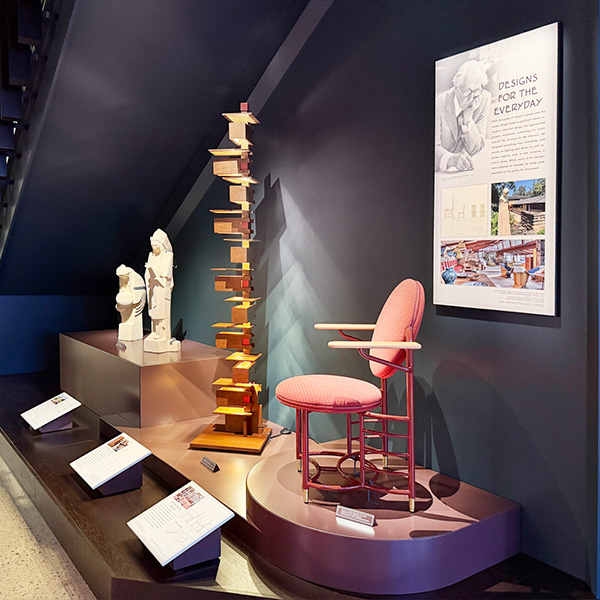


The hope is that guests walk away knowing why he was one of the greatest architects that ever lived.
If you don’t understand Wright, his story, theories, and the nuances of organic architecture, can you really appreciate the design? So we really set out to humanize the man. The goal is that visitors will leave with an understanding of why Wright was revered during and after his life. - from Architectural Digest
Caleb Pifer
President & CEO of Hagen History Center
THE DETAILS
EXPERTISE
Visual Brand Strategy
Visitor Experience
Content Development
Curation
Historical Storytelling
Interactive Media
MARKET
Museums / Cultural Centers
The Hagen History Center selected ZEBRADOG to transform the visitor experience and create a 2,700-square-foot interpretive museum centered around Frank Lloyd Wright’s San Francisco Field Office. Surrounding the reconstructed San Francisco Field Office with exhibits, media, and hands-on activities, ZD introduced visitors to Wright’s life, philosophy, and creative process before inviting them to step directly into his workspace. The result is a museum experience that balances preservation with participation, making one of Wright’s most significant surviving interiors accessible to audiences.
Areas of Impact
A Personal Greeting from an Architectural Icon
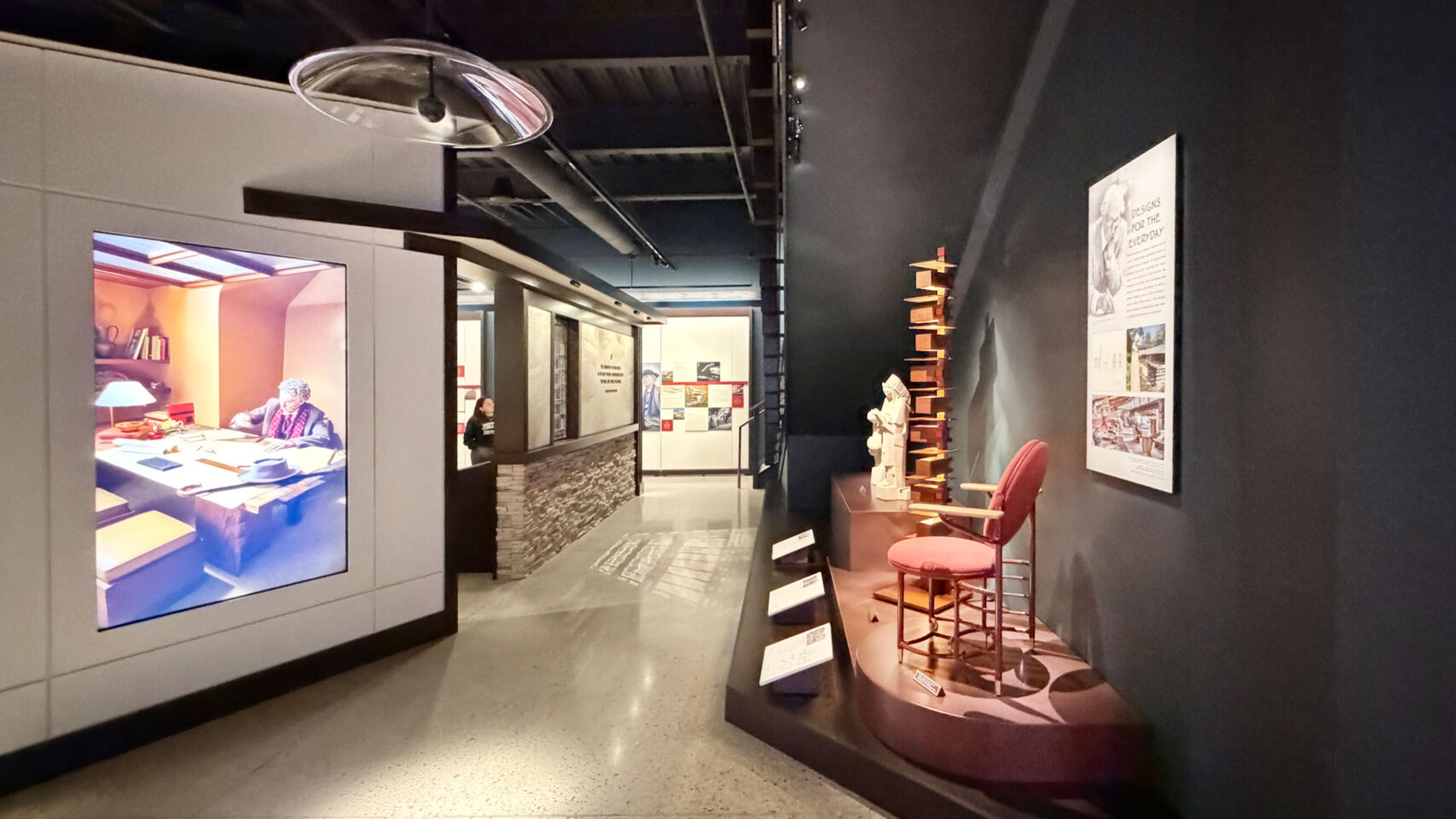
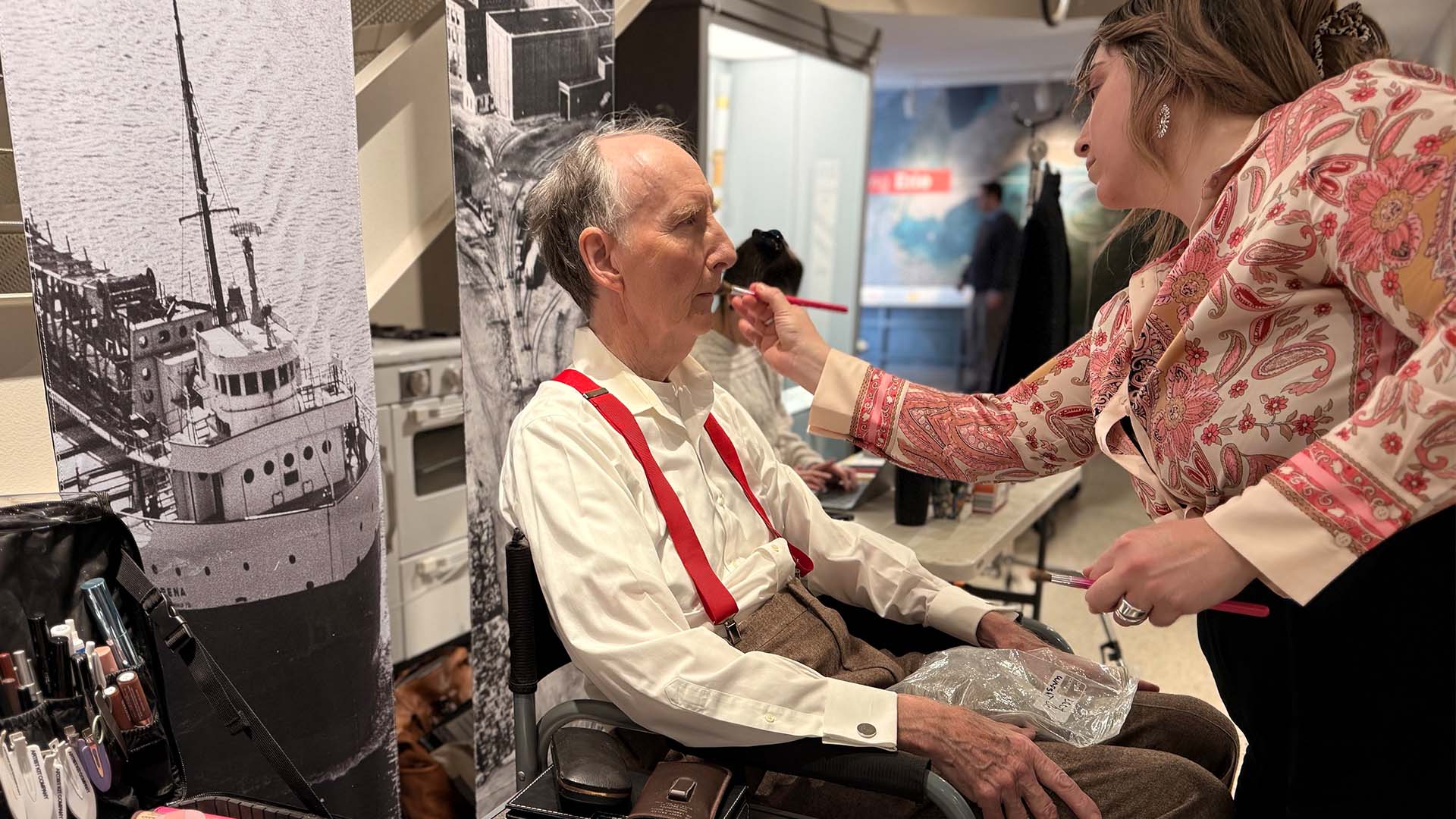
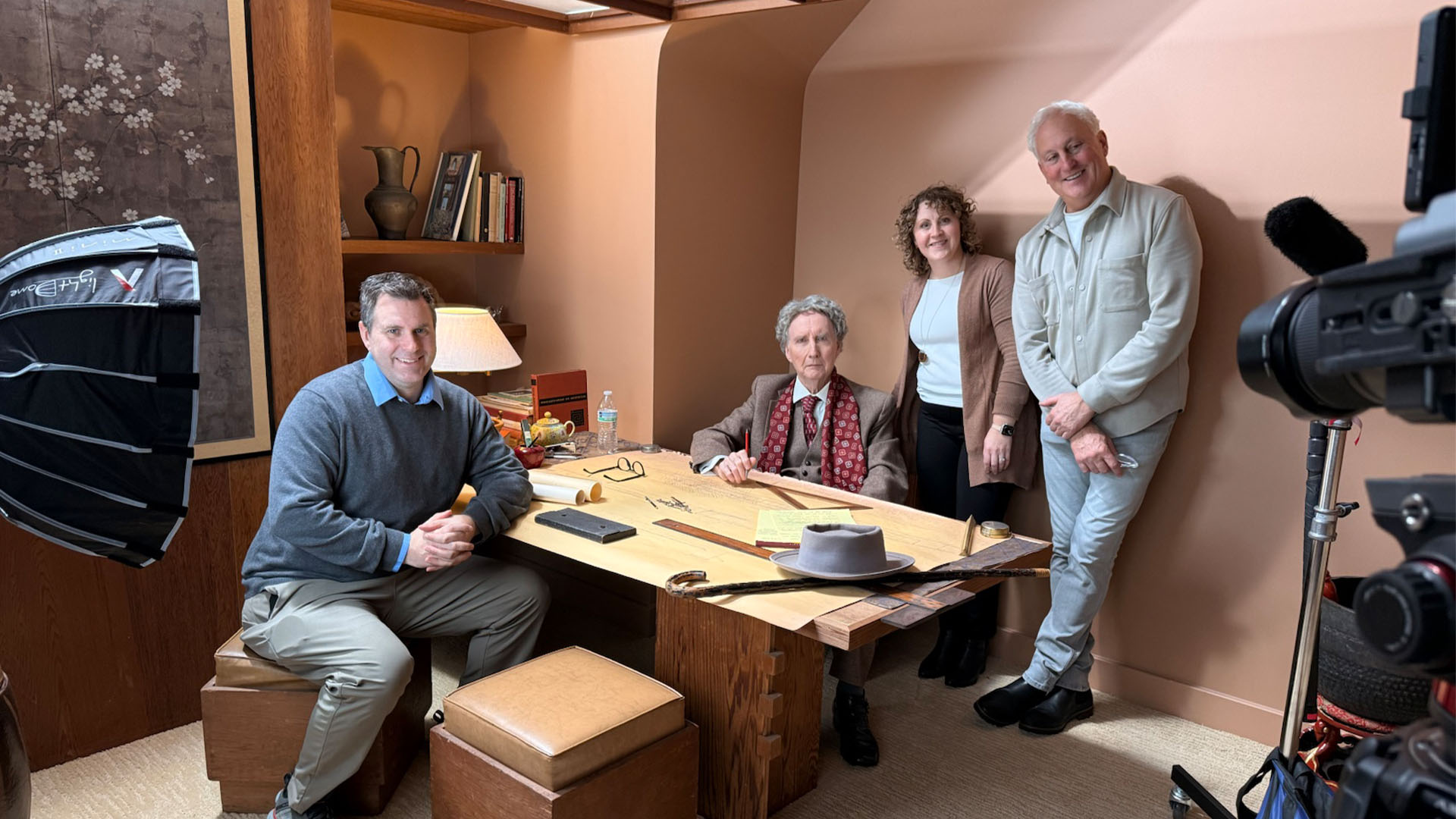
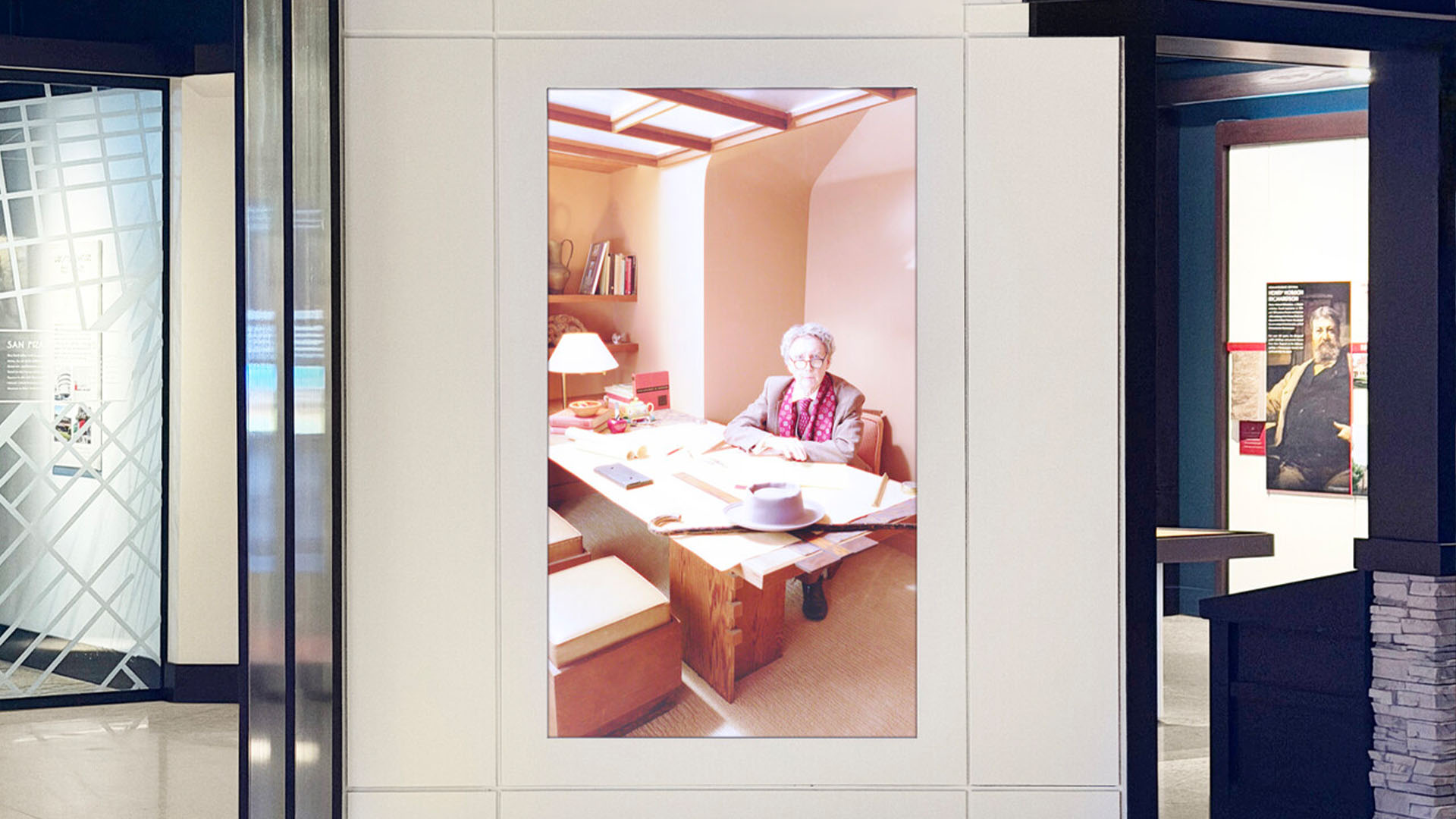
Rather than beginning with text panels or timelines, ZEBRADOG produced an immersive digital welcome experience that brings Frank Lloyd Wright to life the moment visitors enter the museum. The team crafted the original script, directed, and managed the video production with a carefully cast actor portraying Wright, and also developed the motion-activated installation that responds as guests approach. Through era-specific dialogue delivered from within the actual Field Office, “Wright” shares the projects occupying his desk, creating the illusion that visitors have triggered a moment in history and establishing an engaging introduction to the museum experience.
“My Students will Learn By Doing” Frank Lloyd Wright
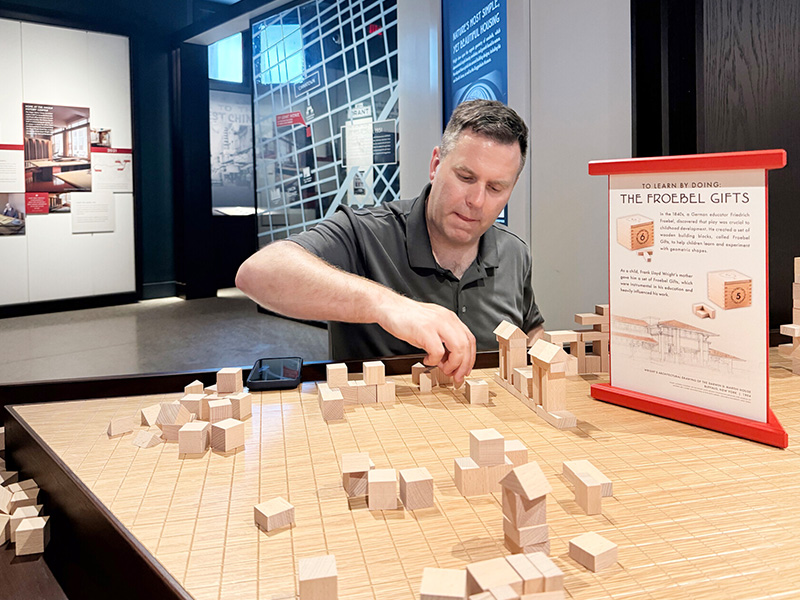
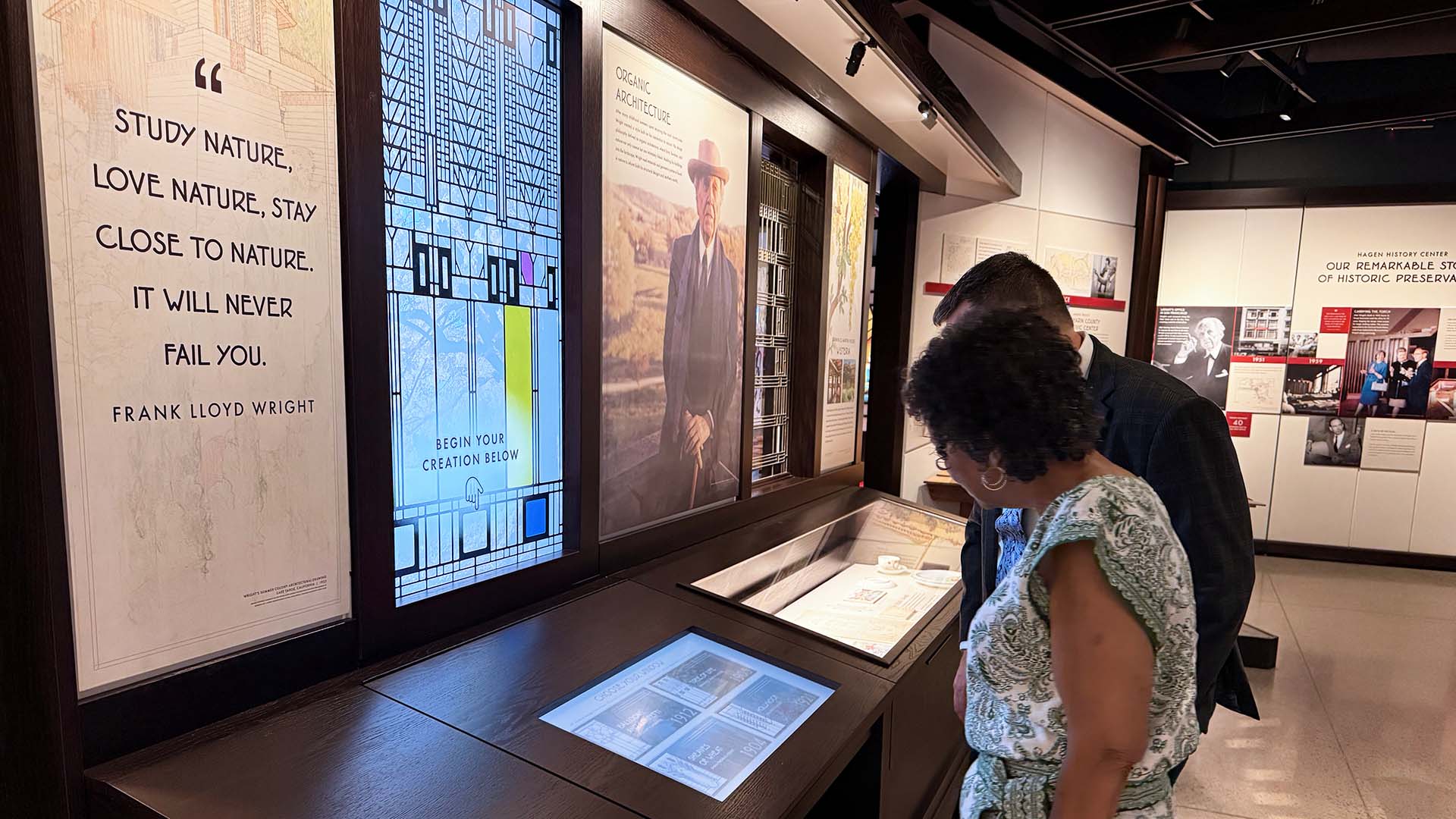
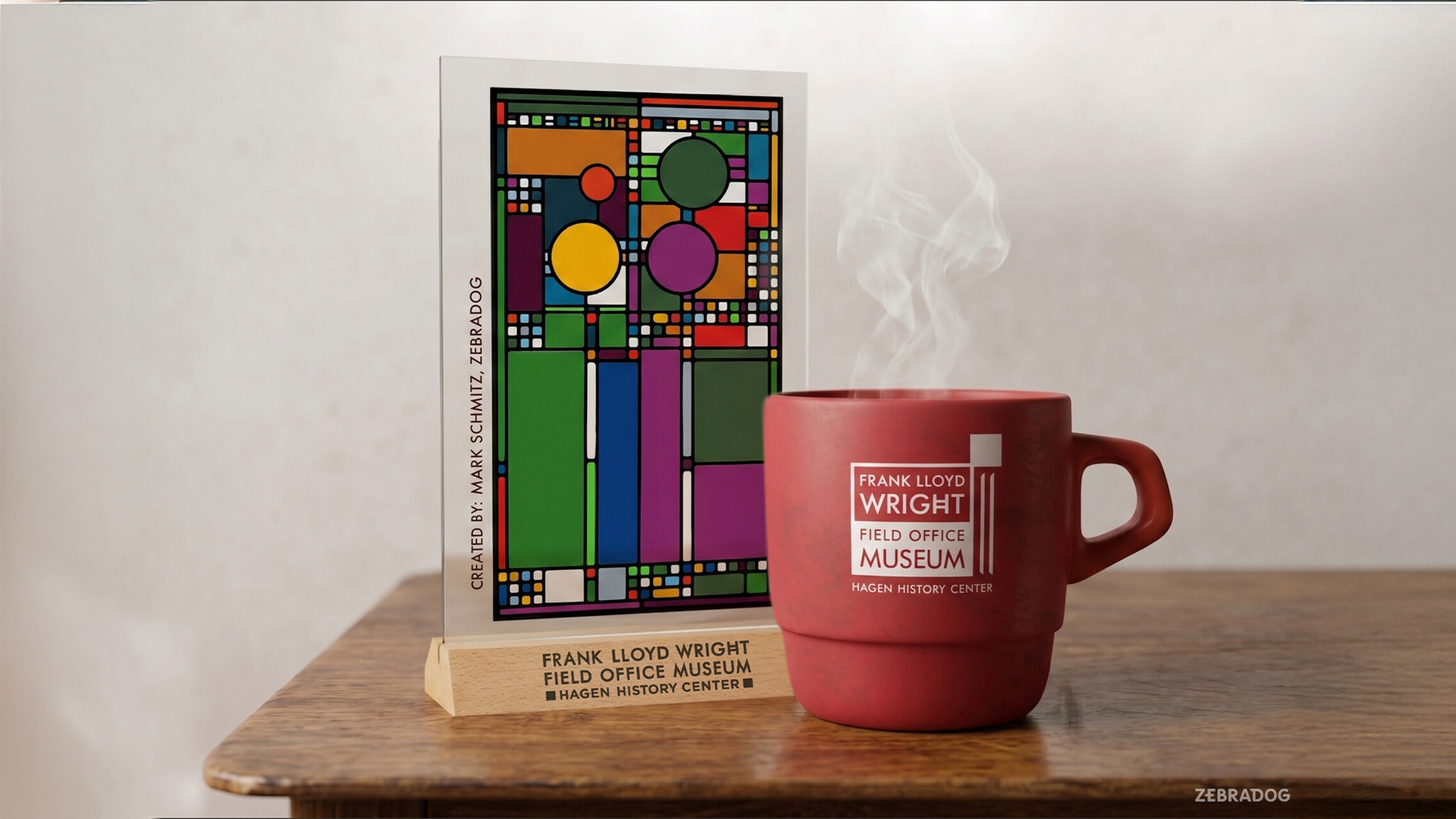
ZEBRADOG also developed a series of interactive exhibits that invite visitors to explore Frank Lloyd Wright through hands-on making. Designed around his belief in “learning by doing,” these experiences engage guests directly with his creative process. Visitors can design their own art glass-inspired compositions to take home, experimenting with how nature informed Wright’s use of color, pattern, and proportion. A specially designed table invites guests to create their own designs using authentic Froebel blocks, echoing the foundational tools of his early creative education.
Rather than simply observing Wright’s ideas, visitors are invited to work through them, gaining a more intuitive understanding of his design philosophy through making.

The Journey of an Architectural Treasure Across Time & Place
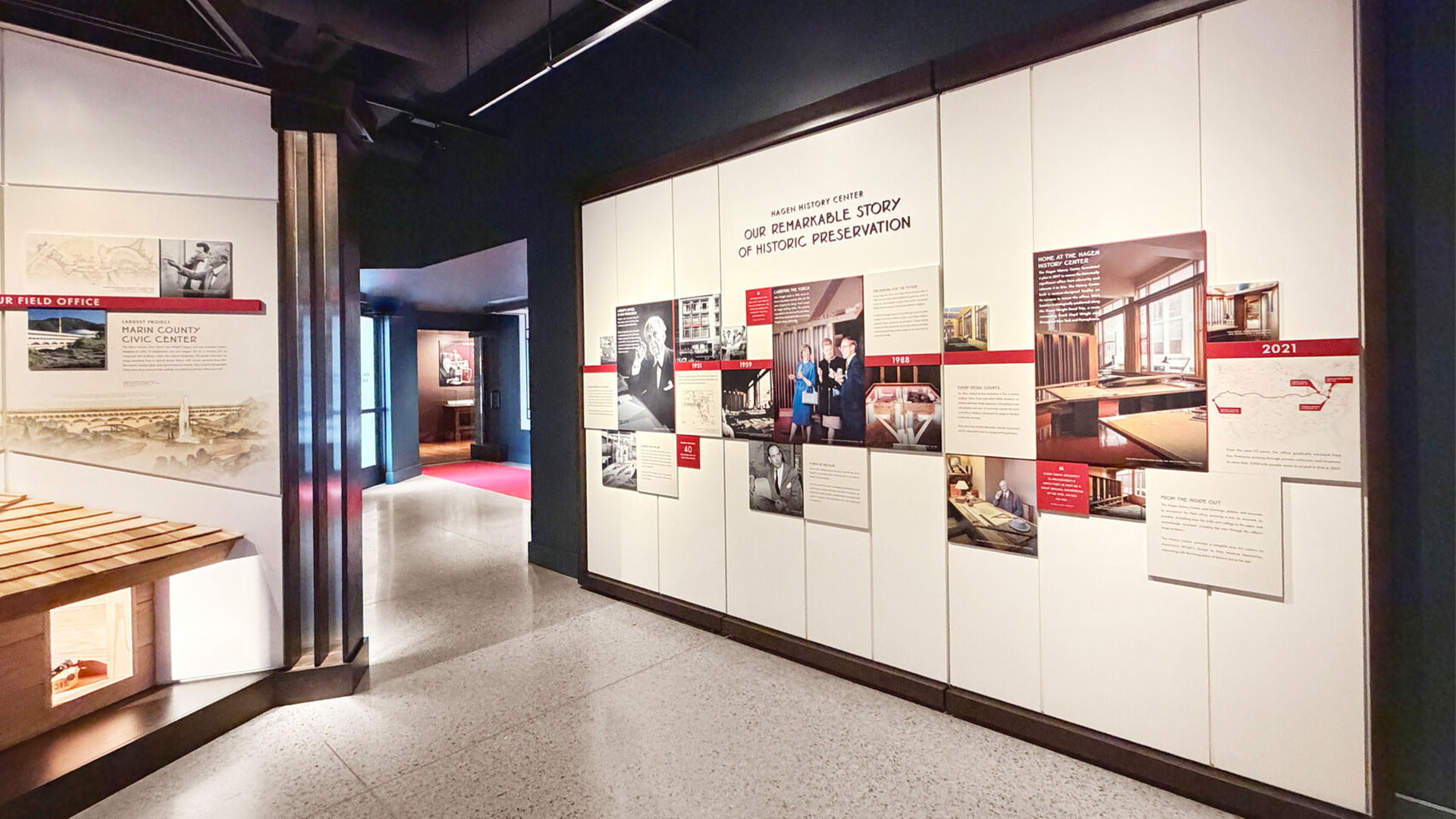
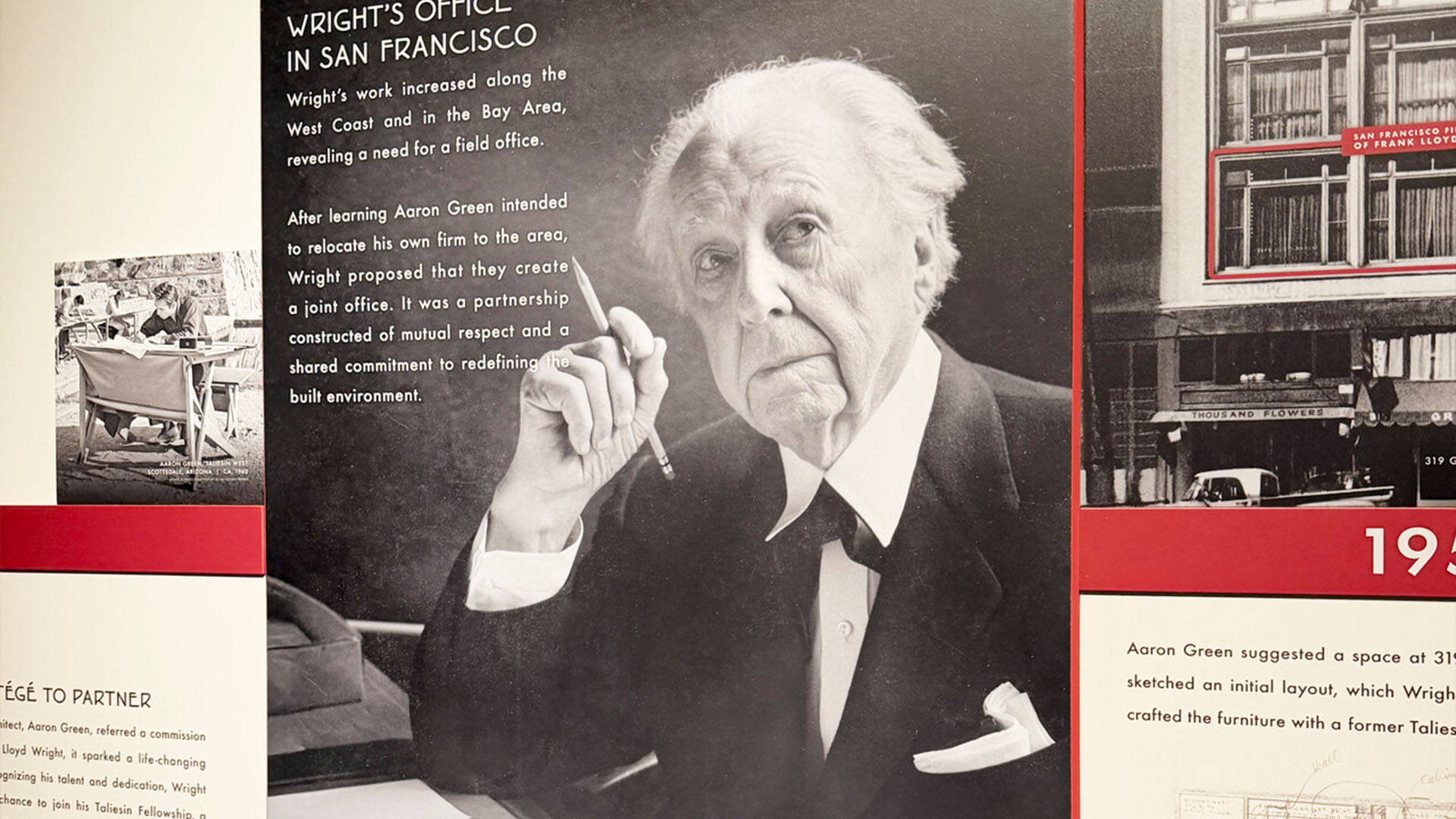
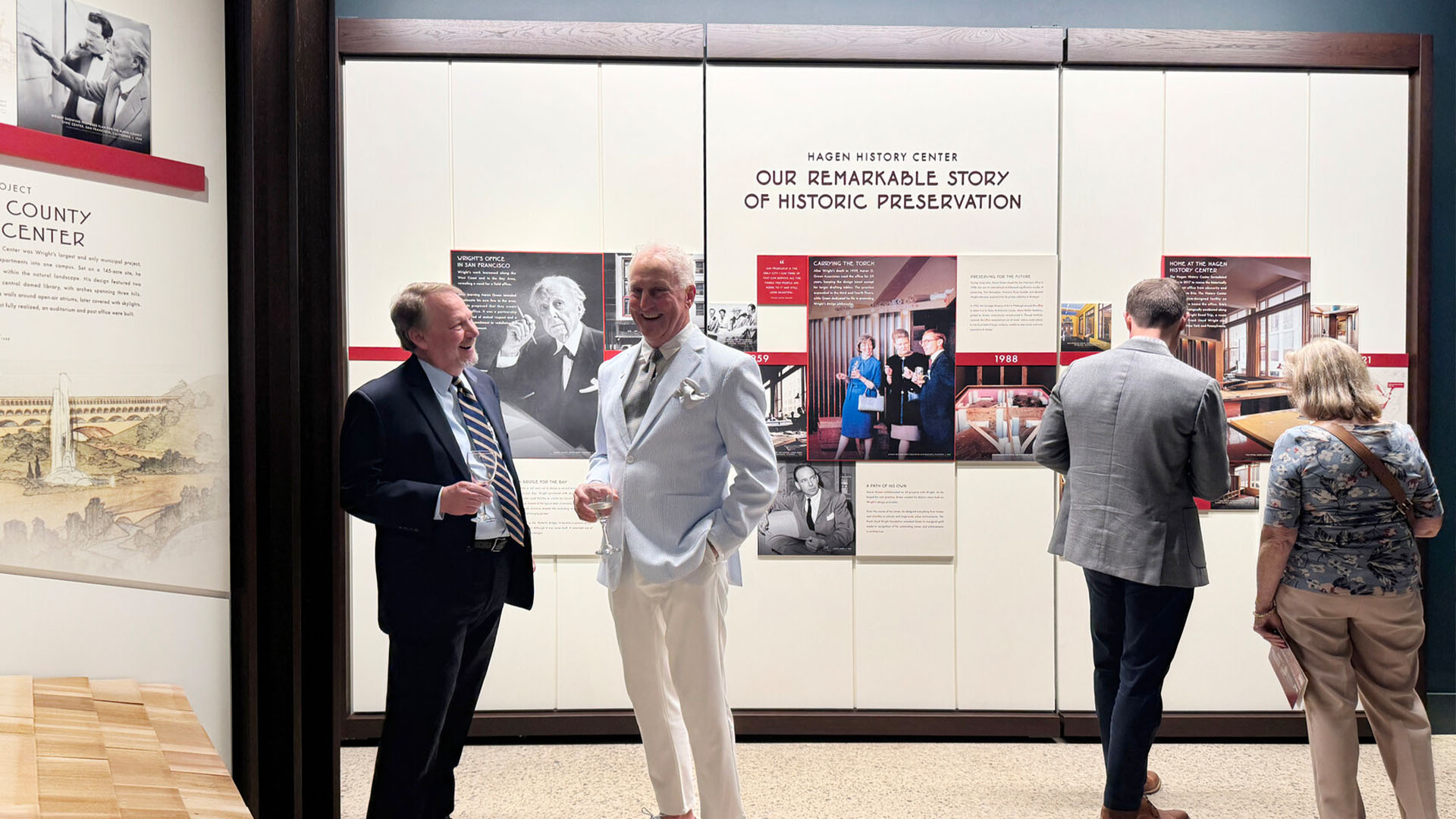
ZEBRADOG’s interpretive approach makes the journey itself legible, clearly communicating how the office was relocated from San Francisco to Erie, and the important role the Hagen History Center played in its careful preservation and reassembly. Visitors encounter original materials, including Wright’s hand-drawn instructions to his associate, Aaron Green, bridging design intent and built reality. Rather than preservation behind glass, the experience reveals preservation as an active process, one shaped by movement, stewardship, and interpretation.
Stepping into an Architectural Experience
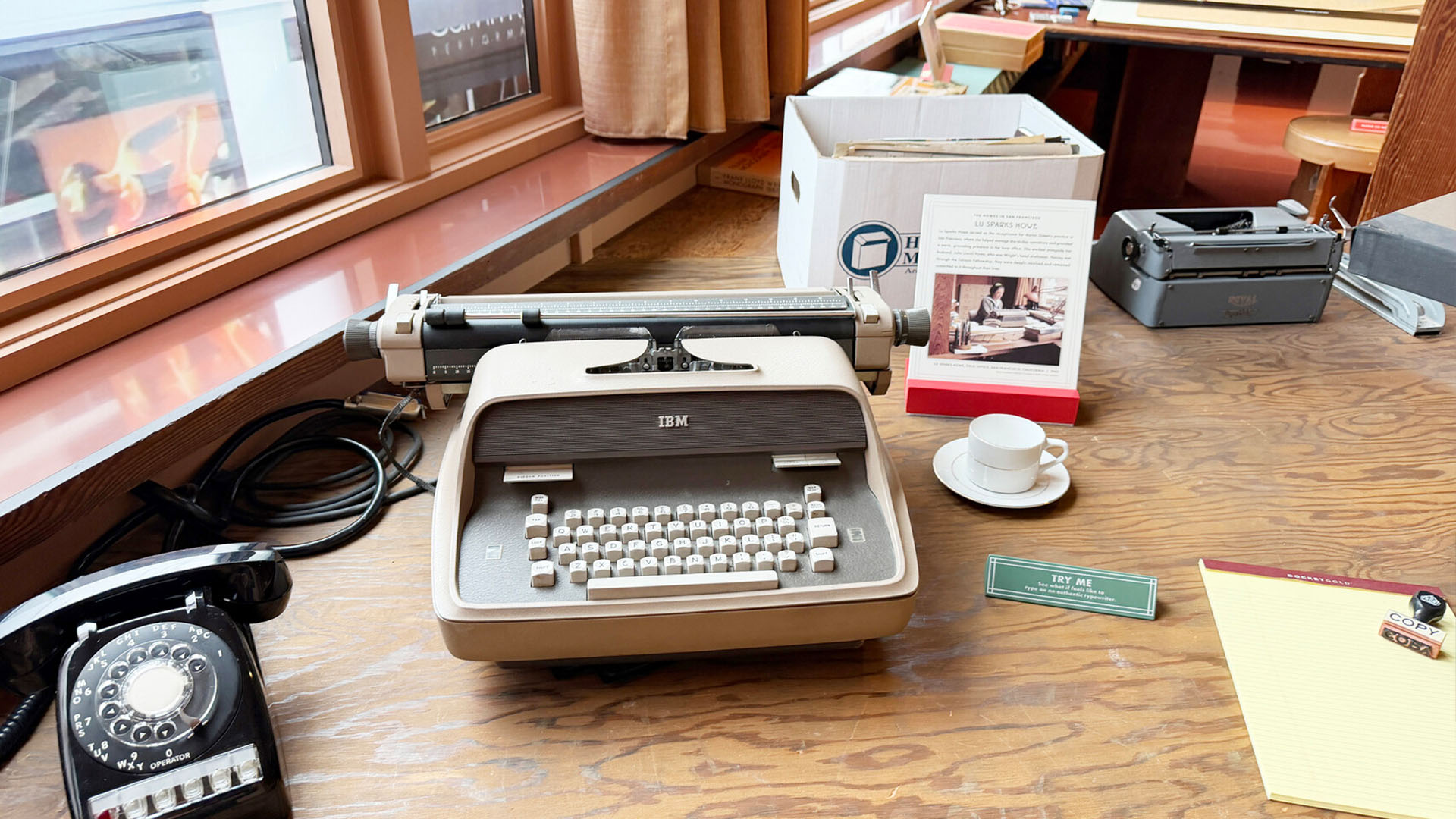
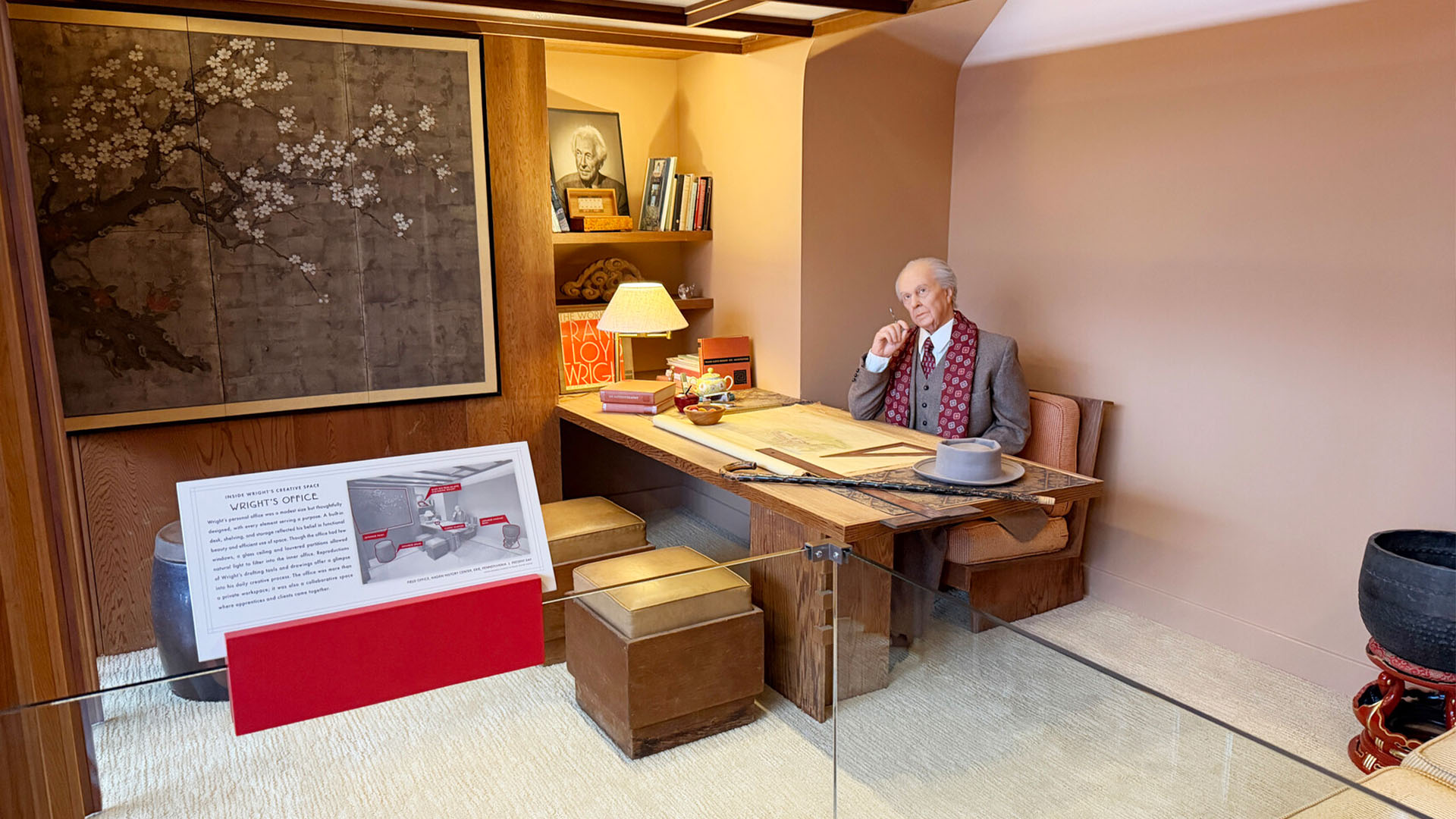
Once inside the office, ZEBRADOG’s intent was to keep the focus on the space itself. Given the self-guided format, interpretation is handled through subtle layers. Small panels introduce stories from the office’s heyday: the secretary who kept operations running, the man who later helped reconstruct the space, and the role of physical drafting tools in a pre-digital era. A soundscape of bustling San Francisco streets, typewriters, and office chatter extends the experience beyond the visible, suggesting the office is still active. A life-scale figure of Wright at his desk provides a unique presence, anchoring the space without competing with the architecture itself.


Wright’s Smallest & Largest Projects
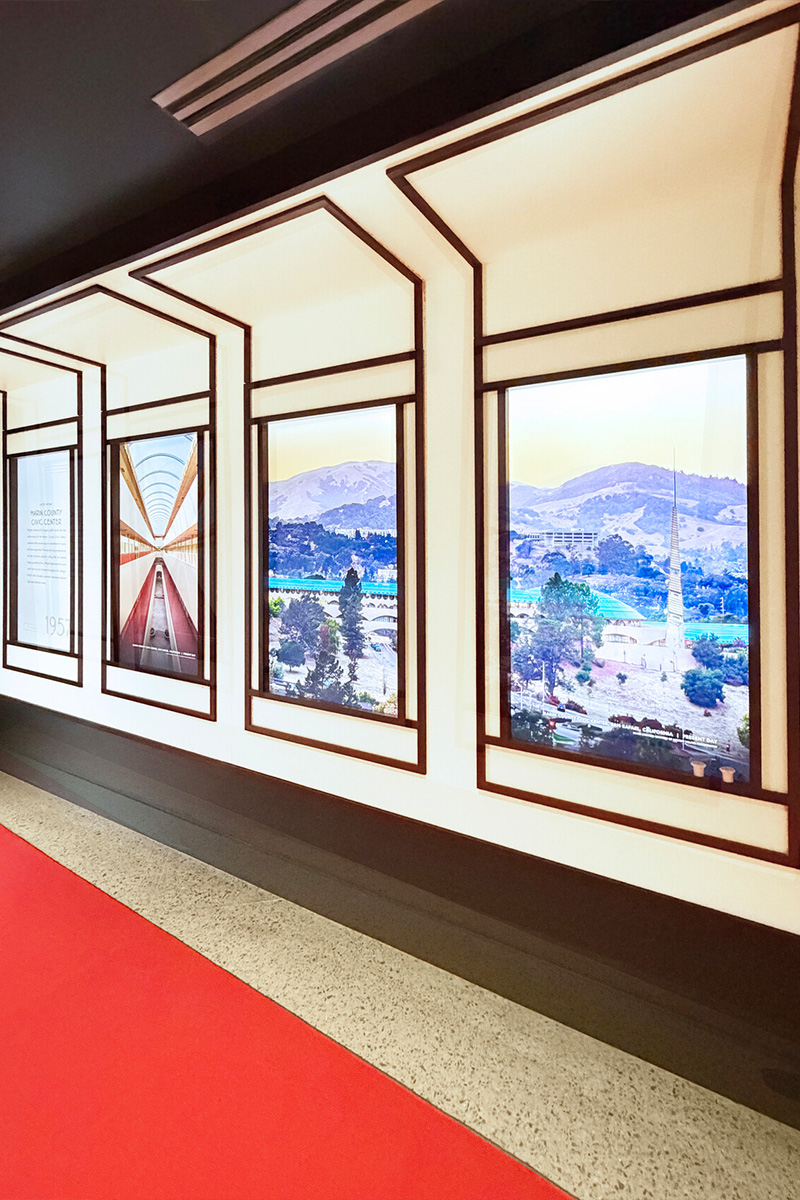
Focusing on the two extremes of work that emerged from Wright’s office, this exhibit invites visitors to move between scale and intention, from the intimate to the monumental. At one end is a doghouse designed for a client’s pet, Eddie, presented through Wright’s original sketch. Visitors are encouraged to crouch down and peer inside, discovering a small dog bowl and sensor actived bark. At the other is the Marin County Civic Center, the largest and only civic building Wright designed and saw built. Expressed through original drawings and finished photos, it reveals the ambition and vision that defined the later years of his practice. These two works underscore Wright’s range: a practice capable of shaping both the most personal expressions of care and the most expansive acts of public architecture.


Hearing Wright in His Own Words
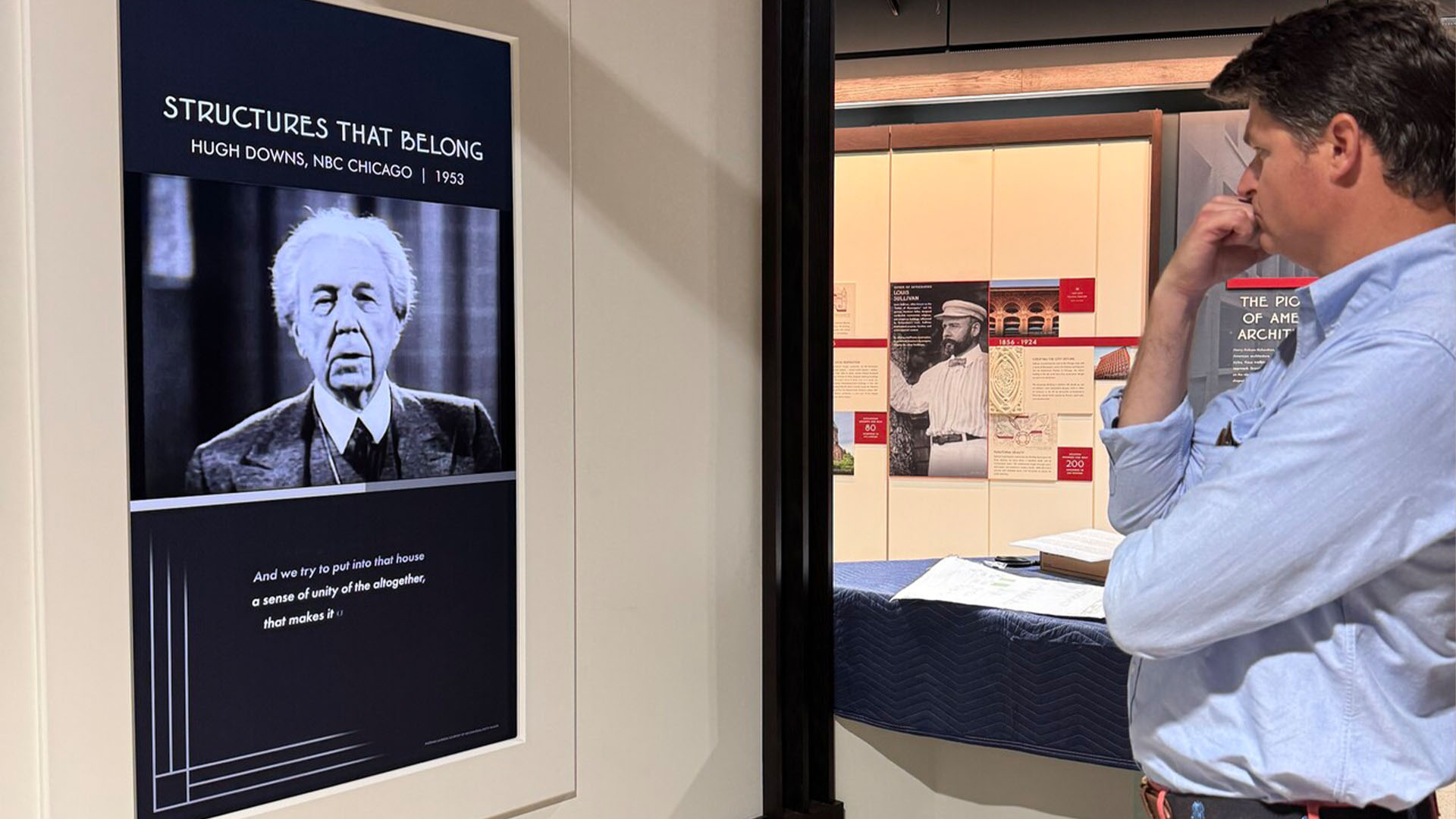
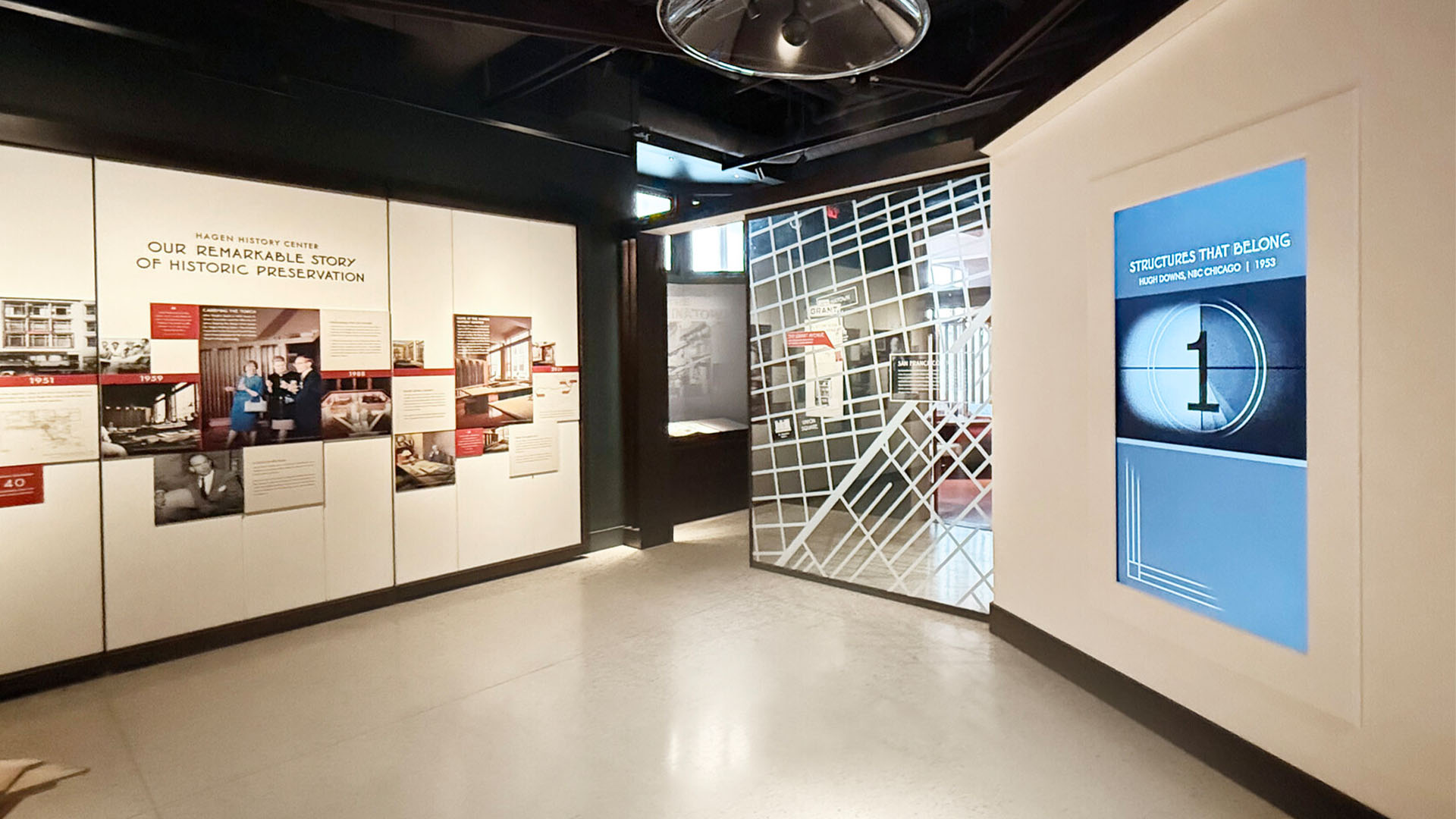
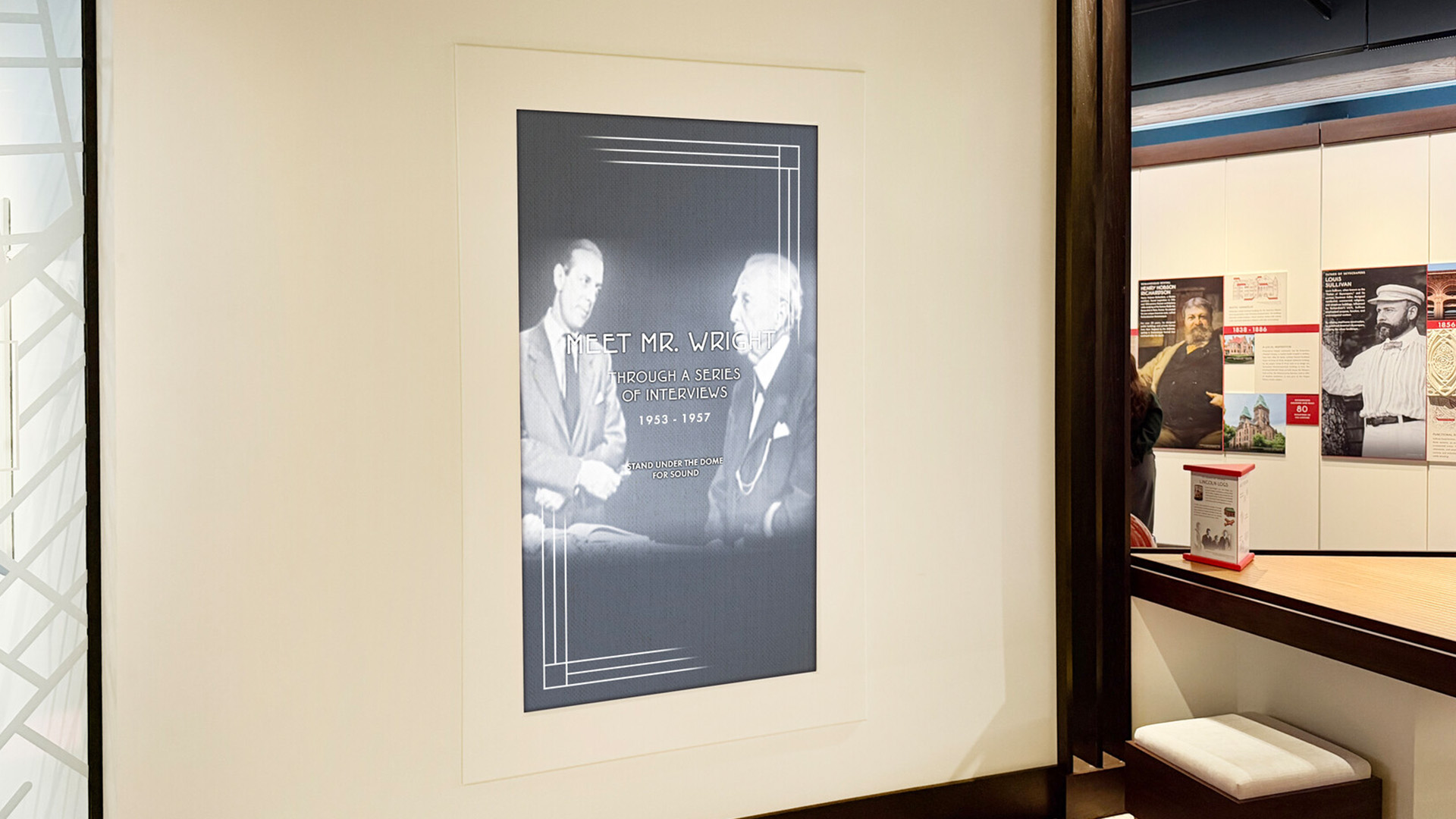
A meticulously curated collection of archived interviews with Wright allows guests to hear his words in his own voice. His architectural principles come through in his own gestures and cadence, captured in conversations with noted interviewers, such as Hugh Downs, Mike Wallace and Alistair Cooke.
Following the interpretive figures of Wright encountered earlier in the museum, this digital experience offers a direct encounter with the real person, grounding the narrative in his authentic presence.
“The Greatest thing Frank Lloyd Wright ever designed was Frank Lloyd Wright” - Phillip Johnson
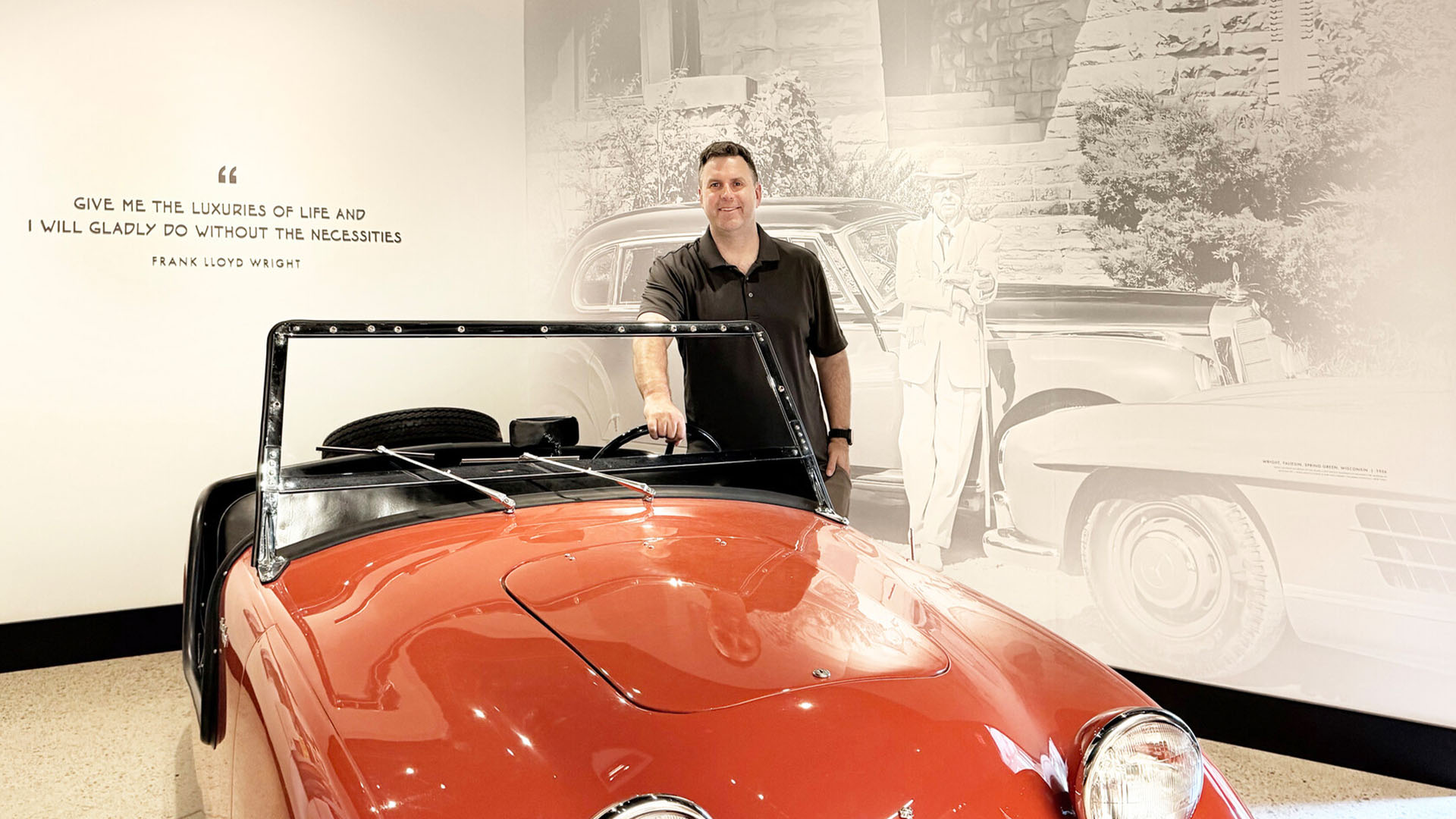
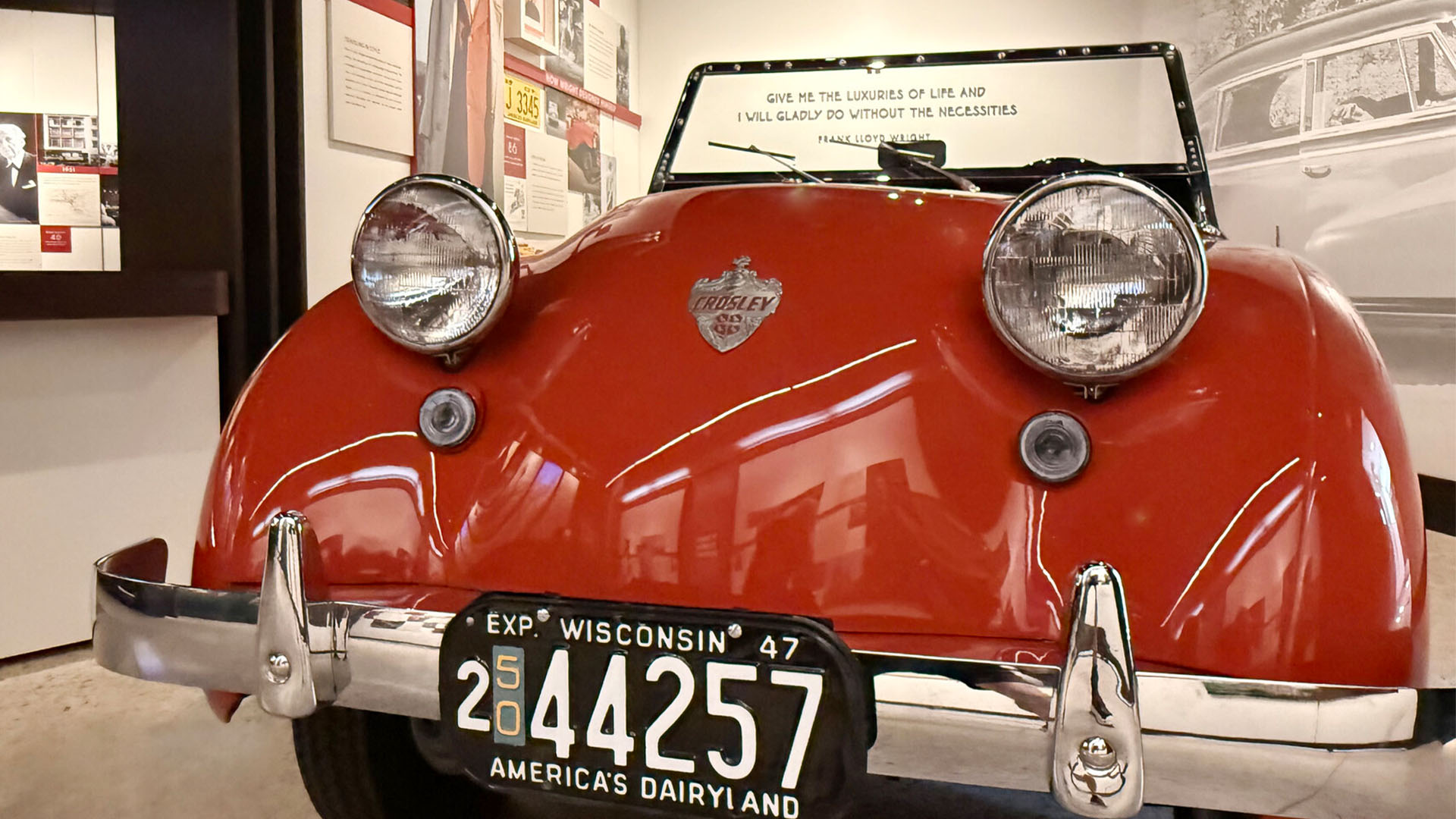
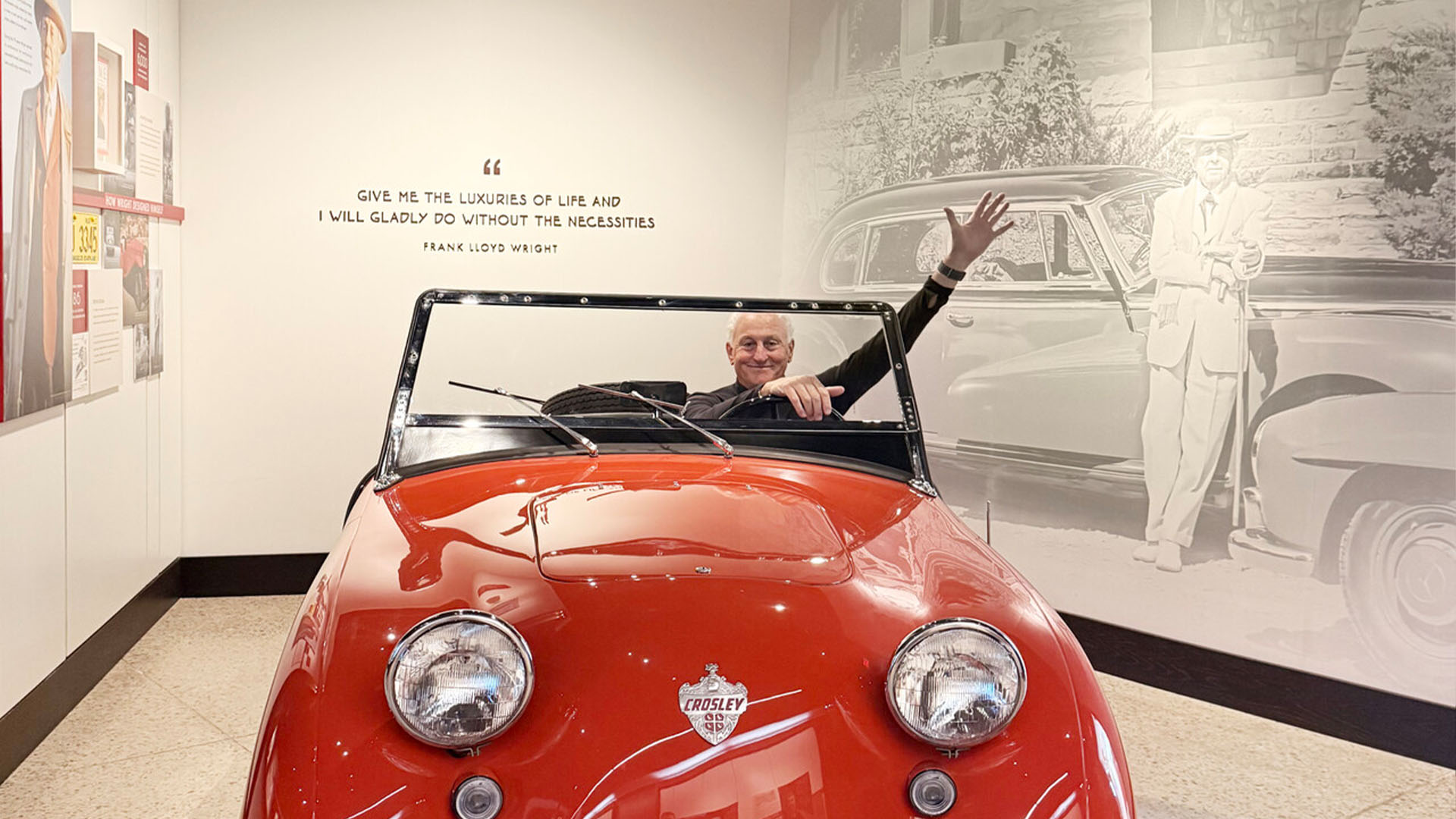
ZEBRADOG also sought to highlight the man behind the legend, revealing how Frank Lloyd Wright carefully constructed his public persona. His eccentric clothes, theatrical flair, and highly curated sense of style extended into the way he traveled, often in signature automobiles that reinforced his image. This includes a real Crosley that guests can sit in, offering a tangible connection to that cultivated world. Wright’s embrace of luxury and design in everyday life was not incidental, it was part of a deliberate self-mythology that helped shape his identity and cement his iconic status.

Legacies of American Architecture
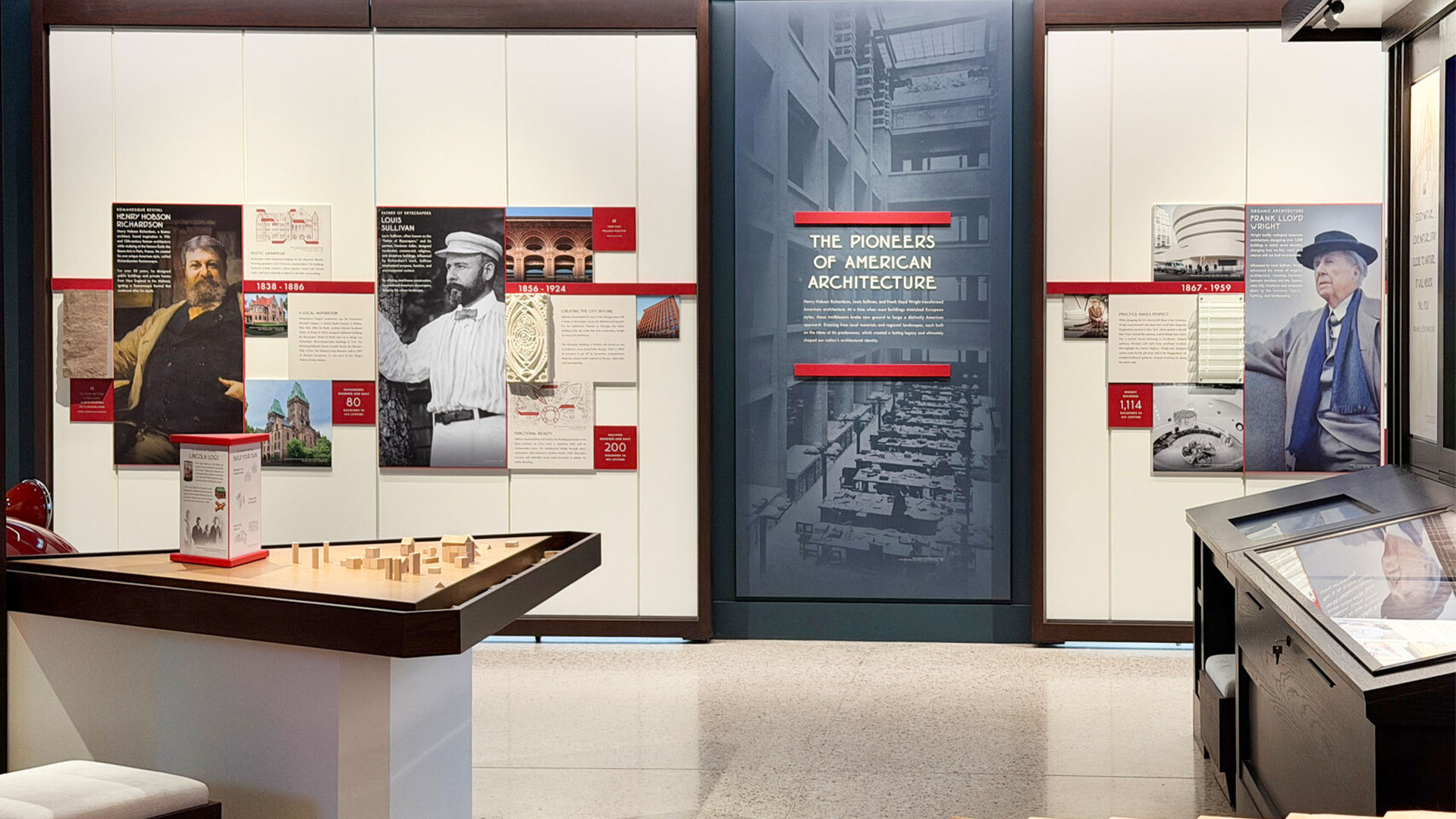
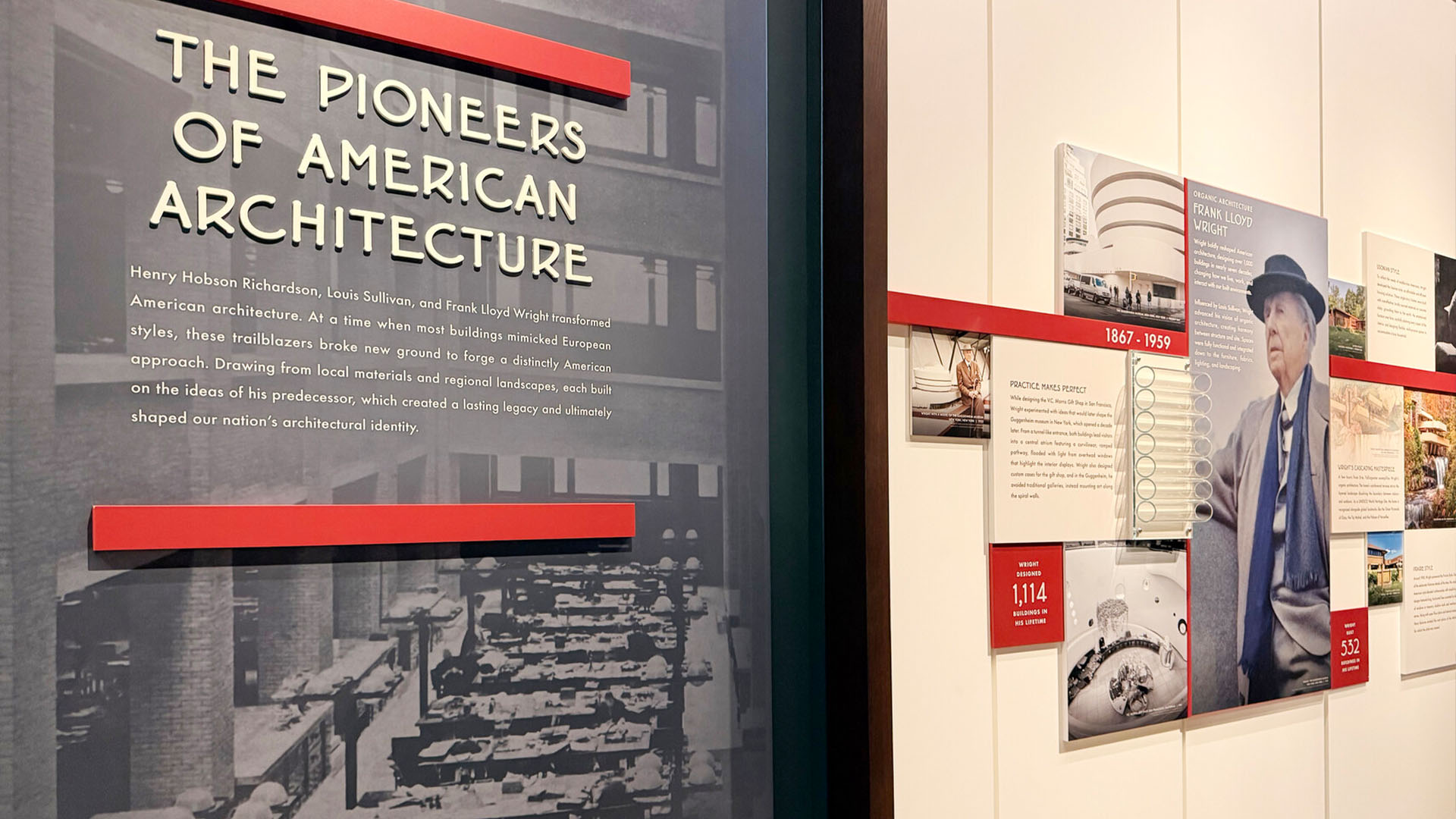
This final exhibit translates a lineage of American architecture into a spatial and material narrative. ZEBRADOG approached the content as a progression of ideas, comparing Henry Hobson Richardson, Louis Sullivan, and Frank Lloyd Wright through shared principles of craft, structure, and expression.
Rather than strict chronology, the design emphasizes continuity, tracing how architectural thinking evolves across generations. Material moments, from carved stone to ornamental tile to early innovations in glass, serve as tactile anchors within the experience. Visitors are invited to physically engage with these differences, touching the textures and surfaces that distinguish each architect’s language and evolution of form.
HUZZAH!